When browsing the internet, many users look for ways to improve privacy, hide their IP address, or access online content from different locations. Two of the most common solutions are VPNs (Virtual Private Networks) and proxy servers. Although both technologies can change your visible IP address and route your internet traffic through another server, they work in very different ways.
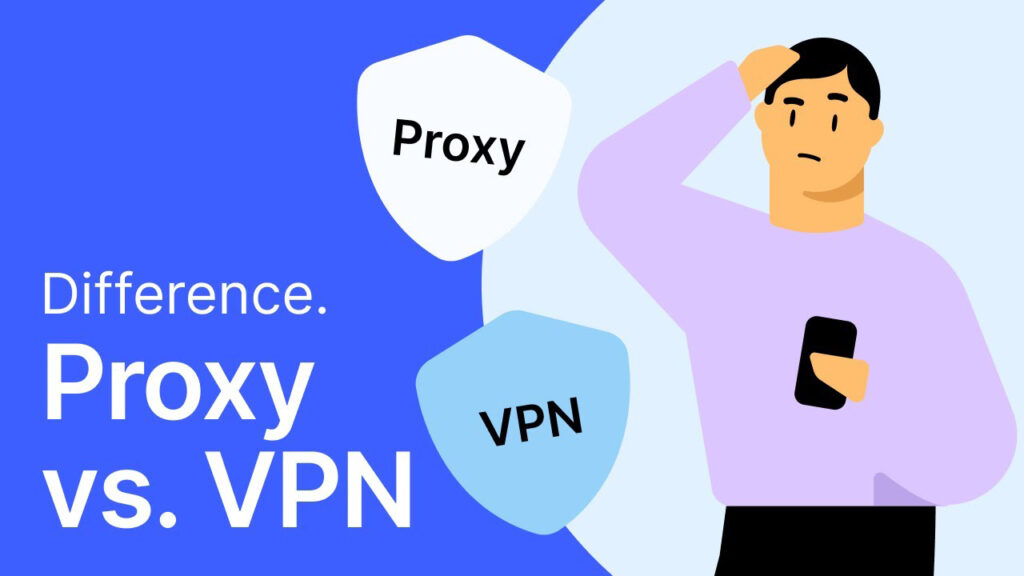
A VPN provides a complete encrypted connection between your device and the internet, while a proxy typically works as an intermediary that forwards traffic through another server. Understanding the differences between a VPN and a proxy can help you choose the right tool for privacy, security, streaming, gaming, or everyday browsing.
What Is a VPN?
A VPN, or Virtual Private Network, creates an encrypted connection between your device and a remote VPN server. When you connect to a VPN service, your internet traffic is first sent through the VPN server before reaching websites and online services. This process hides your real IP address and replaces it with the IP address of the VPN server, making your online location appear different.
The most important feature of a VPN is encryption. A VPN creates a secure tunnel that protects data traveling between your device and the VPN server. This makes it much more difficult for internet service providers, hackers, or other third parties on the same network to monitor your online activities.Modern VPN services usually provide dedicated applications for Windows, macOS, Android, iOS, and other platforms. Many VPN providers also include additional security features such as kill switches, DNS leak protection, multiple server locations, and advanced VPN protocols including WireGuard, OpenVPN, and IKEv2.
For most users, a VPN provides a complete solution for improving online privacy, securing public Wi-Fi connections, protecting sensitive information, and accessing internet services from different regions.
What Is a Proxy Server?
A proxy server acts as a middleman between your device and the internet. When you use a proxy, your internet request is first sent to the proxy server, which then forwards the request to the destination website.
Similar to a VPN, a proxy can hide your original IP address because websites see the proxy server’s IP address instead of your own. However, most proxy servers do not encrypt all of your internet traffic.Proxies are commonly used for specific tasks such as accessing websites through different IP addresses, bypassing simple network restrictions, managing multiple online accounts, or collecting web data.
Different types of proxy servers include:
- HTTP Proxy: Designed mainly for web browsing and HTTP/HTTPS traffic.
- SOCKS Proxy: Supports more types of internet traffic and is often used for applications such as gaming or file transfers.
- Transparent Proxy: Usually controlled by network administrators and may not hide user information.
- Residential Proxy: Uses IP addresses provided by real residential networks.
Unlike VPNs, proxies usually operate at the application level, meaning they only affect the specific application configured to use the proxy.
VPN vs. Proxy: What’s the Difference?
Although VPNs and proxies share some similarities, they differ significantly in security, coverage, encryption, and usability.
| Feature | VPN | Proxy |
|---|---|---|
| IP Address Hiding | Yes | Yes |
| Data Encryption | Yes | Usually No |
| Protects All Device Traffic | Yes | Usually No |
| Works With All Apps | Yes | Depends on Configuration |
| Privacy Protection | High | Limited |
| Connection Speed | Good | Often Faster |
| Setup Difficulty | Easy with Apps | May Require Manual Setup |
| Best For | Security and Privacy | Specific Applications |
Security and Encryption: Why VPNs Offer More Protection
The biggest difference between VPNs and proxies is the level of security they provide. A VPN encrypts your entire internet connection, meaning your data is protected from the moment it leaves your device until it reaches the VPN server.
This is especially important when using public Wi-Fi networks in places such as airports, hotels, restaurants, and cafes. Public networks can expose users to security risks because attackers may attempt to intercept unprotected traffic. A VPN adds an additional layer of protection by encrypting the connection and preventing unauthorized access to sensitive information.
A proxy, on the other hand, mainly changes your visible IP address. While this can provide some level of privacy, it does not necessarily protect your data from being monitored. Unless a proxy uses encryption, your internet traffic may still be visible to network operators or other third parties.
For users who prioritize privacy and security, a VPN is usually the better choice because it combines IP masking with encrypted communication.
Privacy Comparison: VPN vs Proxy
Both VPNs and proxies can hide your IP address, but their privacy capabilities are different.
A proxy changes the IP address visible to websites, but the proxy provider may still be able to see your traffic depending on the type of proxy and whether encryption is used.
A VPN creates a secure tunnel between your device and the VPN server. This prevents your internet service provider and local network operators from easily viewing your online activities.
However, privacy depends on the VPN provider’s policies. Users should look for VPN services with:
- Clear privacy policies
- No-logs policies
- Strong encryption standards
- Independent security audits
A VPN does not make users completely anonymous, but it provides significantly stronger privacy protection than a standard proxy.
VPN vs Proxy: Speed Comparison
Speed is one area where proxies may have an advantage. Since most proxies do not encrypt traffic, they often require fewer resources and may provide faster connections in certain situations.
However, VPN speed has improved significantly in recent years. Modern VPN services use advanced protocols such as WireGuard, which are designed to provide strong security while maintaining high performance. The actual speed difference depends on factors such as server distance, network quality, VPN provider infrastructure, and connection type.
For everyday activities such as browsing, video streaming, and online work, a reliable VPN usually provides enough speed while offering much stronger security benefits.
VPN vs Proxy for Streaming
Many users use VPNs or proxies to access online content from different regions. While both technologies can change your apparent location, VPNs are generally more suitable for streaming because they provide dedicated applications, encrypted connections, and optimized servers.
Streaming platforms often detect and block unreliable proxy connections. Premium VPN providers usually maintain larger server networks and regularly optimize their servers for streaming performance.
For services such as Netflix, Disney Plus, Hulu, and other streaming platforms, a VPN is usually a more reliable option because it provides both location flexibility and connection security.
VPN vs Proxy for Gaming
Gaming users often choose between VPNs and proxies based on connection speed and stability. A proxy may sometimes provide faster routing because it does not encrypt traffic, but it offers limited protection.
A VPN can provide additional benefits for gamers, including protection on public networks, access to different server regions, and additional privacy. However, choosing a VPN server that is far away from the gaming server may increase latency and affect ping.
For gaming, users should select VPN servers located close to their game servers and choose VPN providers with strong network performance.way. Choosing a nearby VPN server is usually important for maintaining good performance.
VPN vs Proxy for Torrenting
For torrenting and peer-to-peer connections, VPNs are generally considered a better option because they protect the entire internet connection instead of only one application.
A good VPN for torrenting typically provides features such as P2P-supported servers, strong encryption, a kill switch, and privacy-focused policies. A proxy may only protect the torrent application itself and does not provide the same level of overall connection security.
Users should always follow local laws and copyright regulations when downloading or sharing files online.
When Should You Use a VPN?
A VPN is the better choice if you need stronger privacy protection, encrypted connections, or security across your entire device. VPNs are commonly used by people who want to protect personal information on public Wi-Fi, secure remote work connections, access global content, or reduce exposure of their online activity.
For most everyday internet users, a VPN provides a more complete solution because it protects multiple applications and services at the same time without requiring complicated configuration.
When Should You Use a Proxy?
A proxy can still be useful for specific situations where encryption is not the main requirement. For example, users who only need to change their IP address for a particular browser or application may find a proxy sufficient.
Proxies are commonly used for specialized tasks such as web testing, automated data collection, location-based testing, and managing specific network connections.
However, users should understand that a proxy is not a replacement for a VPN when security and privacy are the main concerns.
VPN vs Proxy: Which One Should You Choose?
The choice between a VPN and a proxy depends on what you want to achieve. If your main goal is simply changing your IP address for a specific application, a proxy may be enough. It can provide a lightweight solution without additional software requirements.
However, if you want better privacy, encrypted traffic, protection on public networks, and security for your entire device, a VPN is the better option. For most users who browse websites, stream videos, work remotely, or use public Wi-Fi, a VPN provides a more reliable and comprehensive solution.
While both technologies have their own advantages, VPNs offer significantly broader protection and are the preferred choice for users who value online security and privacy.